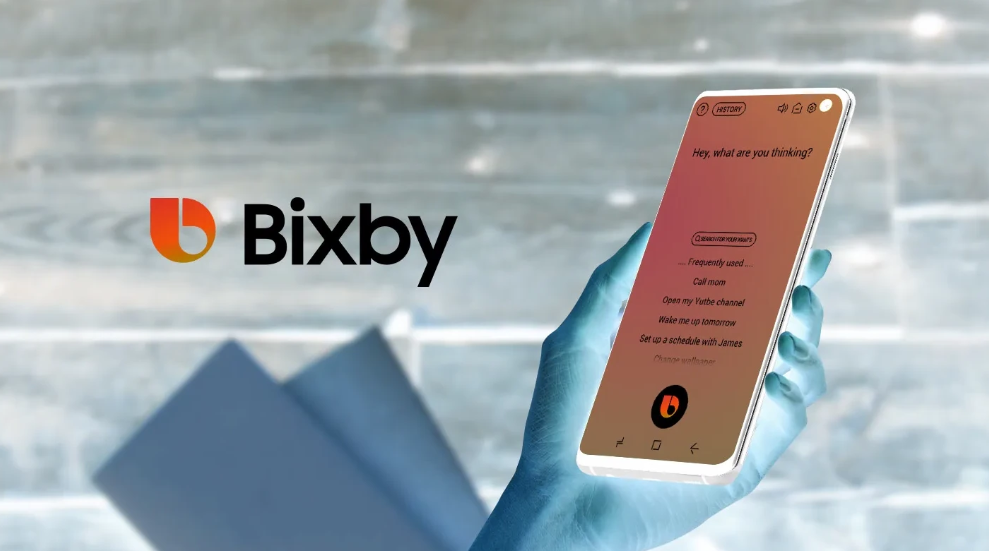
Samsung today unveiled new features for its Bixby digital assistant that are designed to make it more responsive and intelligent. With new customizable wake-up words, AI-generated voice clones, and support for Follow commands, the company hopes to attract more users to its ecosystem. The update comes as AI-based services have come to a head with the advent of generative text and art services. The biggest feature that is immediately available to all users is Bixby Text Call. This is a feature that allows you to answer a phone call by typing words and having Bixby read them to the caller. It arrived in Korea last year and the company will expand it to English-speaking users this February.
When Samsung first launched Bixby as a voice assistant
“When Samsung first launched Bixby as a voice assistant, it was part of a vision to create a human-to-machine interface that makes life easier and can advance over time with Samsung Galaxy innovation,” said YoungJip Kim, executive vice president and head of AI, Mobile experience Business, Samsung Electronics. “Today, we introduce updates to build a more intelligent interface that is proactive and adaptive, giving people greater control over their mobile experience.”
In Korea, Samsung is rolling out a feature that lets you clone your voice so Bixby’s text-to-speech voice sounds like you, and those pesky admin phone calls can be automated. Expansion to other languages is planned in the future. Samsung is also launching tracking requests for Korean users, with expansion planned in the future. More generally, artificial intelligence on the device is available to increase speed and allow commands to be executed offline. There is no need to use the data, for example, to set a timer or turn off the flashlight.
From smart assistant to a smart platform
Today, Bixby can provide smoother continuity and better adaptation to user needs through the introduction of new scenarios4, including playing music based on exercise type in Samsung Health or saving schedules to a calendar. Bixby can now better understand intent and process tracking requests by understanding context and word associations that were previously used in interactions. For example, Bixby users can start a workout on Samsung Health first and then ask Bixby to turn on the best music5 for that workout by saying “Play music for this workout.”
3 Incredibly Useful Features You Should Try on Your Samsung Phone:
Samsung Galaxy devices are packed with useful tools and features. Here are eight you may not have tried but are worth checking out.
One of the best things about a Samsung device is its feature-rich software. There are so many useful settings you can change and features you can use to make your Galaxy phone or tablet work better for you.
In this guide, we will cover the most important features that you should try right now to make your device more user-friendly.
1. Access your notification history
Notifications have become so common that we often instinctively delete them without properly
viewing them. This is usually not a big problem, but sometimes you can dismiss a notification
that contains important information.
Don’t worry, your Samsung phone records moments like this and can keep a notification history of the last 24 hours. Here’s how to do it:
- Open your device settings and select Notifications > Advanced settings.
- Tap Notification History and turn it on. Once turned on, your phone will start saving the notifications you receive throughout the day. To keep things organized, it automatically categorizes them based on the apps that are sent to them.
- To view all the notifications you’ve received from a particular app in the last 24 hours, tap the dropdown icon next to that app.
In addition to the list of notifications received in the last 24 hours, you’ll also see recently dismissed notifications for quick access.
2. Use Sidebars for Quick Access
A trivial but common problem among smartphone users is trying to find a particular app in a sea of apps on their phones. To make this easier, Samsung phones come with edge panels that act like mini drawers that you slide out from the side of the screen.
Along with that, you can set up the edge panels to perform various actions such as making calls, taking screenshots, starting a voice recording, checking the weather, starting a timer, opening a new browser tab, and more.
To enable this feature, simply go to Settings > Display and enable the Edge panels. Once you turn it on, a controller will appear on the right side of the screen (which you can customize later). Slide it to open and access your panels.
From here, you can populate the app drawer with your favorite apps (up to 22 apps) by tapping the hamburger icon and choosing Edit. To add more panels, go to the Edge panels menu, tap Panels, and choose the ones you find useful.
3. Delete Shared Screenshots
Do you often share screenshots with other people but then forget to remove them from your gallery? All those screenshots that you don’t need to save are taking up your device’s memory.
Luckily, you can set your phone to automatically delete a screenshot after posting from the screenshot toolbar. To do this, go to your device’s Settings, select More Features > Screenshots and Screen Recording, and turn on Delete Shared Screenshots. Remember that the screenshot toolbar only appears for a couple of seconds after you take a screenshot. So if you miss it, your screenshot will be saved to your gallery and then you’ll have to delete it manually.